
Why We Sold One of Our Rental Properties
From the beginning of our investing journey my long term goal has been to buy distressed houses, add value, rent them out, pay them off, and keep them forever. Using this strategy owning around 10 houses would provide for a very comfortable retirement. We are now in our 7th year of serious real estate investing and we have decided to start selling some of our properties. There are several reasons:
Stuck Capital / Return on Equity:
 Stuck capital is a reason to sell real estate. For this house in particular we owe roughly $40,000 on it, and after doing a roughly $10,000 renovation after our tenants moved out, it is worth around $120,000. The house would likely rent for around $1,200 per month and my actual income would be around $5,000 per year accounting for all expenses.
We are talking about a total of $70,000 of stuck capital in this property. An option to get this capital out would be to refinance it, but if I did I would be trading my 3.75% interest rate for a 7.5% interest rate on the $40,000 of existing debt. $70,000 represents with the current economics about 14 years worth of rental income, and that is if everything goes right (It won’t). Freeing this capital up is a big win.
At my current projections keeping this property as a rental only produces a return on equity of 7.14%
Alternatively, I can sell and take this equity and reinvest it in another property. Two days prior to signing a sell contract on this property I signed a buy contract on a 12 site mobile home park with 2 houses on it. I paid $255,000 for it with a down payment of roughly $65,000, roughly the equity I have in this house. This property as is generates $38,000 per year in net operating income. The down payment for this property is coming from a cash out refinance we did on another property, but still having capital available allows us to invest in properties with a potential for a larger return. In this scenario, after closing costs my Return on equity including debt payments for the new property will be greater than 50%.
I can also use this capital to pay down variable rate debt. Over the last couple years we have financed multiple projects with our home equity line of credit and we do not want to get primary loans on those properties. Selling this property alternatively could pay down high interest rate debt. Our current interest rate is 7.25% on our home equity line of credit, so we would have a slightly higher rate of return paying debt off of this Heloc than keeping the rental.
Getting Out of Benton Harbor City:
Most of our investments are in Benton Harbor City and neighboring Benton Township. Benton Harbor city is not landlord friendly, despite the majority of the housing units in the city being non owner occupied. The city manager routinely talks negatively about landlords.
The city charges an income tax for all income earned in the city. I am not a fan of this, and it increases costs for myself and the tenant. (Well only my tenants because I have had negative income for my Benton Harbor rentals since we started.) The city mismanages its funds. For the third time in 12 months the city is borrowing from the income tax fund to pay for general expenses. The income tax fund was supposed to go to roads and emergencies. From 2017 until 2024 no withdrawals were taken, then Between March of 2025 and February of 2026 3 have been taken. They are now talking about a fourth.
Although this particular property has not been unfairly assessed, I do have another single family house in Benton Harbor that was unfairly assessed and despite appealing this twice, Benton Harbor has been unwilling to lower the assessment. For that property I paid $35,000 and invested $5,000 into it. The city says it is worth over $89,000, effectively charging me twice what I have spent on it.
Reducing Total Number of Single Family Homes:
Single family homes from my viewpoint and experience, do not provide as much of a return as multifamily. The multifamily properties I have have more consistent income and I have a higher degree of control over the value of the property. Single family home valuations are based off of what others will pay for a similar house, while multifamily property valuations are based off of net operating income. Because of this with multifamily I can force asset appreciation through increasing the operating income.
Single family homes are also more difficult for lower income tenants to manage. With most of our single family homes being low income rentals, we have had several tenants end up in difficult situations. Single family houses cost more to operate than an apartment. Generally the tenant is paying a water, sewer, trash bill and all other utilities in a single family house. With multifamily those expenses are mostly fixed and can be spread across all the units. Houses are bigger than apartments and often cost more to heat and cool. The houses require lawn mowing.
There is typically more damage that a tenant can do to a single family house than an apartment. 1,200 square feet vs. 750 square feet. Fewer rooms, fewer walls, fewer windows, fewer floors. This makes turnovers quicker and reduces the cost and risk for us. For our apartments we are able to charge a security deposit of 1 month’s rent, whereas with a single family home we charge the state maximum of 1.5X a month’s rent. If not limited by the state we would charge 2X monthly rent.
I have a friend who owns a business providing apartment turnaround services for a large complex in North Carolina. They routinely have units flipped in under 48 hours. It isn’t uncommon for my single family houses to require a month to flip for the next tenant.
Conforming Loan Freed Up:
This is a much smaller concern. While this property has an amazing interest rate, it is for a small amount. Conforming loans are limited to 10 per person (and we have everything in our combined names, so as a couple we have self limited to 10). We currently have 7 conforming loans. Most likely future conforming loans would be for 4 plexes or for a lake property. Selling this property now gives us 4 available conforming loans.
Increase Home Ownership Opportunities:
I am one of the evil landlords buying up all the houses. Now to be fair I buy the houses no one else wants that need substantial rehabs that generally can’t qualify for loans, so most owner occupants could not buy them, but I digress. Selling these houses that are now in livable/loanable condition increases the opportunity for owner occupants to become home owners. Home ownership is a net good for society. The buyer of this house is a first time home buyer owner occupant.
The Numbers:
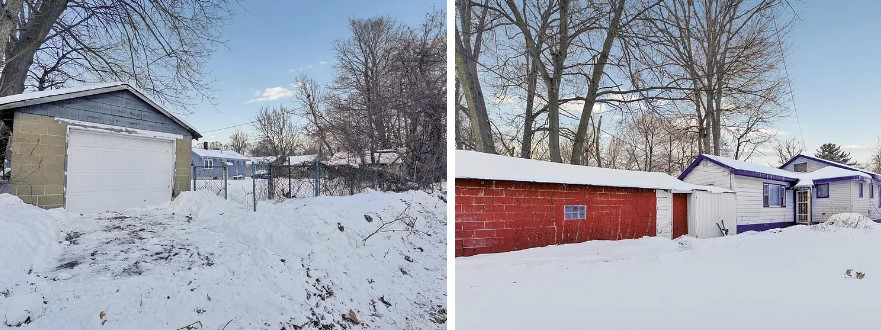
We paid $32,150 for this house in December of 2020. At the time most people were not buying houses. Covid was in full swing. Life in Michigan was especially draconian during Covid. This was a bank repossession that was originally listed for $57,900 then a month later dropped to $49,900, then a month later to $44,900, then the weekend we were submitting our offer they dropped the price to $34,900 right before our offer went through. Our Realtor saw this right as he was submitting our offer for $32,150 and asked if we wanted to lower our offer further because of this. We chose to keep our offer where it was at because with this large of a price drop I felt other investors would pounce and I wanted to lock in getting it.
Right after we purchased this house Mrs. C. had a friend who needed a place to rent. Rather than doing an extensive rehab we focused on making the house clean, safe, and functional. We spent just over $4,000 and roughly 4 weeks on the initial rehab. With our closing costs our all in cost was $37,000. Shortly after they moved in we had to replace the water heater at a cost of around $2,000 so we are at $39,000 in costs.
After about a year we went after a cash out refinance following the BRRRR strategy (Buy Rehab Rent Refinance Repeat). The house appraised for $68,000 and we were able to get a 15 year loan $51,000 at 3.625%. It’s so surreal that interest rates for investment properties were that low! After paying our closing costs we got a check for around $47,000, fully paying back our entire investment and giving us an extra $8,000. At this point we had no cash in the property. Now 4 years later we owe roughly $40,000 for the property.
When our last tenants moved out they caused some damage and we used this opportunity to do a more extensive rehab. Everything got repainted. We replaced the appliance and the flooring throughout the house. We replaced the furnace and replaced a cabinet with a folding counter top. We spent an additional $11,000 on this property. We also spent hundreds of hours of labor on it across 6 weeks.
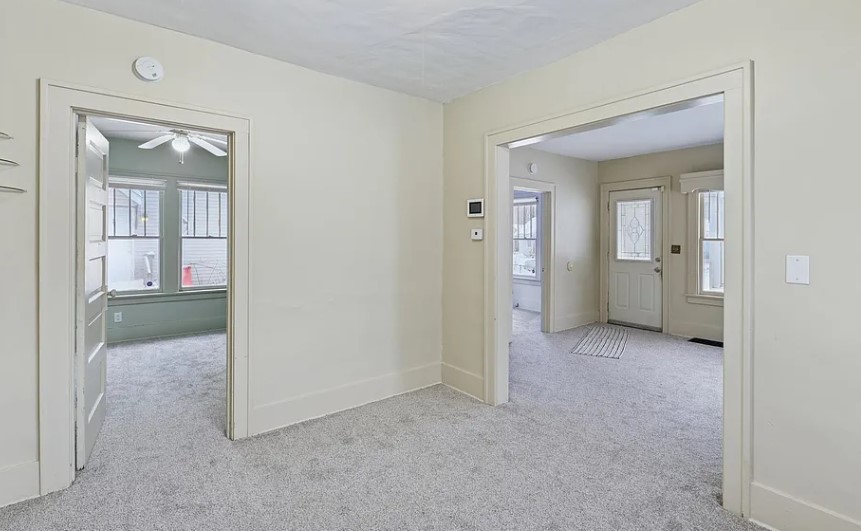
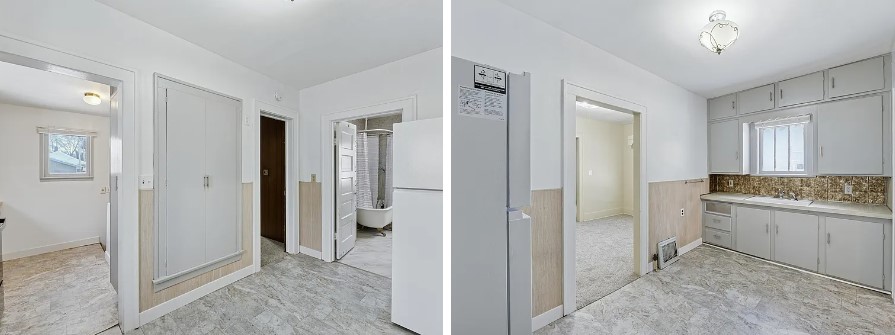
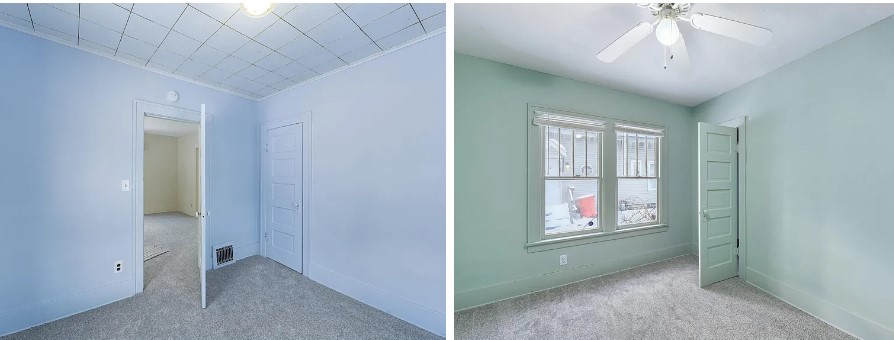
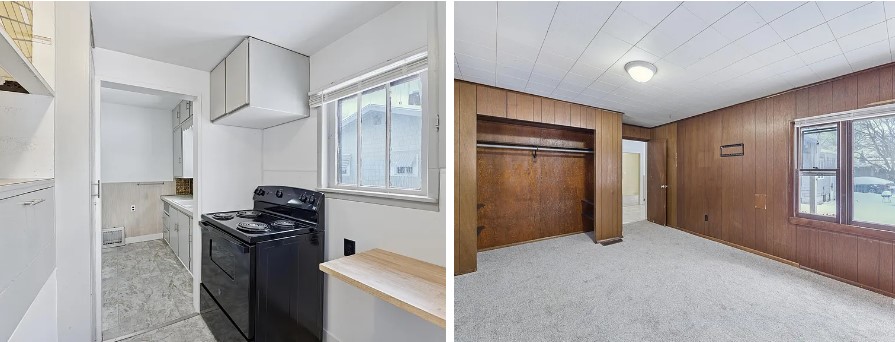
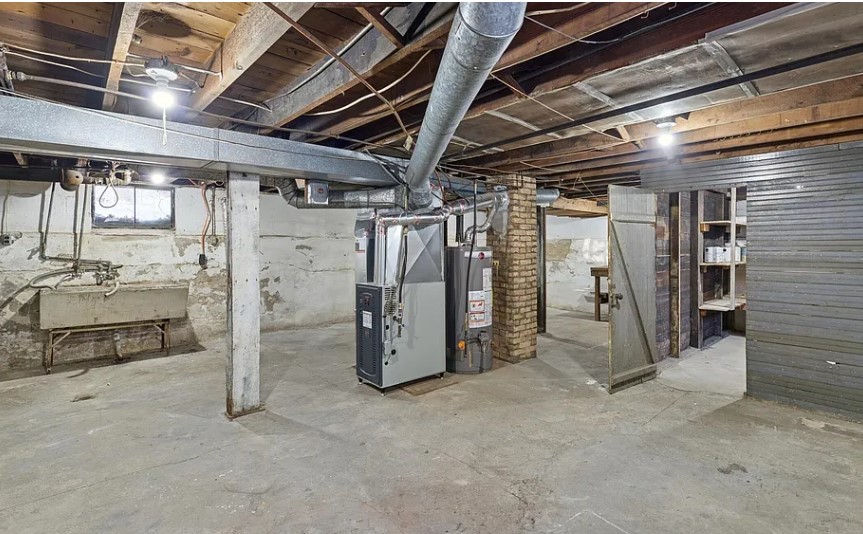 I originally was thinking that we would maybe get $95,000 on the high end. Our Realtor was thinking $130,000 to $135,000 and we listed at $122,000. About 36 hours after listing we had an offer for $120,000 and accepted.
The first offer ended up falling through after the home inspection. The home inspector created a 125 page report, and pointed out everything that exists in every older home as a major deficiency. We did address the more major findings, but the buyer decided to pass. We relisted the house and had a new buyer the following weekend at the same price. This time after the home inspection the buyer did require three items be repaired and we did so. We needed to replace a drain line for the tub, fix a sink drain, and re-attach a piece of soffit that had fallen.
To make things easier for the buyer we offered a large cash back at closing, in addition to paying for the buyers agent commission. We signed a contract in early February expecting roughly 30 days to close and that did not happen. This deal got delayed due to bank issues on the buyers end, but after almost 3 months we FINALLY closed in early May. We were certainly relieved for it to close and I’m sure the buyer was as well. It’s really frustrating how overly conservative banks have gotten.
Our buyer was able to utilize a low down payment loan with the Michigan Down Payment assistance program. Since we covered the closing costs with a $3,600 credit and paid the buyers commission, the down payment was the only thing she needed to cover. I believe they required her to have 1% of her own funds, which would have been a total of $1,200. That’s less than what most people have to come out of pocket to rent an apartment! For first time home buyers or repeat buyers in specific targeted areas, this is a great option, especially when combined with seller contributions to closing costs! Our buyers Principal and Interest payment is likely under $700/mo.
Giving Up A Low Interest Rate:
Yes it sucks to give up a 3.625% interest rate on an investment property. It sucks even more because the amortization is a third of the way done so most of the payment is going to principal. It matters far more to get out of this property and to free our capital than to maintain this debt. This debt is only on $40,000 and in a couple years will only be on $30,000. It is getting paid down fast. It is best to not let short term incentives drive action over long term goals. In the grand scheme of things the low interest rate on $40K is much less important than receiving $60,000 in cash now and getting a property off our books.
We had a tenant move out of one of our 4 bedroom rentals and we flipped this to move a long term tenant from one of our 3 bedroom houses into that one. The 4 bedroom we replaced all the expensive stuff on it, the roof, the furnace, and the water heater. We have a low interest rate on it and low property taxes locked in.
We will then do a minor rehab for the 3 bedroom house and list it shortly. This house we have financed through our heloc, so 100% of the proceeds will go to paying off our “short term” revolving debt. Another major goal we have is to empty our heloc and build up a cash down payment fund, so that we no longer put our house up as collateral on these projects.
I was really really thankful we closed on this property. Just 12 hours before our closing on this one someone drove a stolen car into our large commercial building. Thankfully no one was hurt, but this will likely take 10s of thousands of dollars to fix and having this house sold will help tremendously with that. Thankfully no one was injured. I will write an article on this once I know all the details.
What do you think of us selling this house? Have you sold any of your investment properties?
Leave a Reply